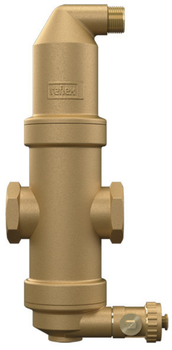
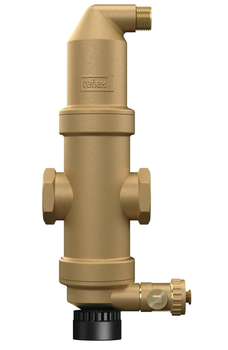
What is the air separator used for and how to install it?
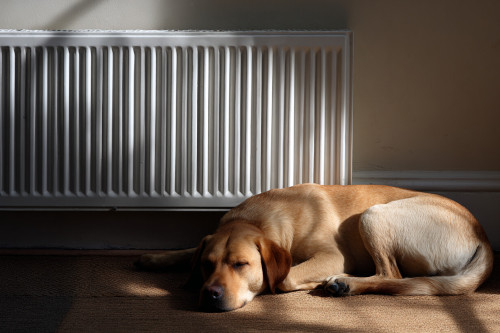
Noises coming from radiators, unevenly heated radiators, or circulating pumps operating under cavitation conditions are clear signals of one often underestimated problem. In such situations, simply venting the system has no lasting effect. Air in the heating system reduces the efficiency of heat exchange, accelerates the wear and tear of equipment and significantly increases the operating costs of the entire system.
Repeatedly used, traditional methods of gas removal work only ad hoc - they do not eliminate the source of the blockage, only its visible effects. Therefore, an increasingly common solution is an air separator in the heating system, which provides continuous and automatic removal of gases from the circuit without the need for constant service interventions.
What is an air separator? This is a specialized device installed in the system, whose task is to capture micro-bubbles of air circulating with the heating medium. Thanks to its design, the separator removes gases before they reach pumps, heat exchangers or radiators, where they could cause noise, corrosion and a drop in performance.
By understanding how the air separator works, you can fully appreciate its importance for reliable operation of the heating system. One properly selected and properly installed device can dramatically improve the comfort of the installation, reduce the risk of failure and extend the life of all its components.
Table of Contents:
- What is the air separator used for in the heating system?
- How an air separator works and on what principle it removes air?
- Where air separators are used in heating systems?
- Where to install the air separator so that it works effectively?
- How is the installation of the air separator step by step?
What is the air separator used for in the heating system?
What the air separator is used for can be explained very concretely and simply - the device the device automatically captures and removes gases dissolved in the heating medium before they reach the circulation pumps, heat exchangers or radiators. Its task is to continuously purge the refrigerant of microbubbles that would normally remain in circulation for weeks, gradually degrading the performance of the entire system.
The presence of gases in a closed system causes a number of serious technical consequences. Cavitation in circulating pumps destroys bearings and seals, noise in pipelines interferes with room comfort, and air plugs block the flow of refrigerant through parts of the system. The air separator in the heating system eliminates these problems at the source, ensuring the full volume of the medium in circulation and optimal heat transfer efficiency.
Sources of air in closed systems include not only inaccurate filling during startup. Any refilling of the system with raw water provides dissolved gases, leaks at joints aspirate air during temperature drops, and diffusion processes through the walls of plastic pipes are a constant source of gaseous contamination even in tight systems.
How an air separator works and on what principle it removes air?
The basic principle of operation takes advantage of physical phenomena occurring in the medium flowing through the appropriately shaped working chamber of the device. How the air separator works can be described as a two-stage process - first, a rapid reduction in flow velocity causes micro-bubbles to coalesce into larger bubbles, then a natural upward motion pushes the accumulated gases to the top of the chamber equipped with an automatic vent.
The internal design of the separator contains elements that direct the flow in a way that forces the rotation of the medium around the vertical axis of the device. The centrifugal force resulting from this movement pushes the heavier agent toward the walls of the chamber, while the lighter air bubbles accumulate in the center of the rotating zone, from where they migrate upward due to the density difference between the gas and water.
The temperature of the medium plays an important role in the efficiency of the separation process. The solubility of gases in water decreases as the temperature increases - so how the air separator performs also depends on its location in the system, where the temperature of the medium reaches its highest values. Optimal operating conditions occur in the return zone immediately downstream of the heat source, where the heated medium releases the largest amounts of dissolved gases.
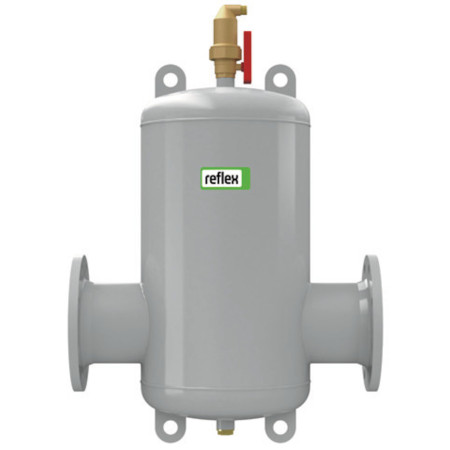
Reflex Exvoid A 65 microbubble separator, flanged
Where air separators are used in heating systems?
The application of separators includes virtually all types of closed systems requiring trouble-free operation. The air separator in the heat substation is a standard feature of professional installation solutions to protect expensive plate heat exchangers from pitting corrosion caused by local oxygen concentration. Multi-family facilities, public buildings and modern single-family homes require this device as part of the basic protection of the heating system.
Underfloor installations are particularly susceptible to air problems in the heating system due to the extensive network of pipelines run horizontally, where accumulated bubbles create permanent blockages that prevent proper flow. A separator installed in the manifold eliminates this danger before the medium reaches the heating loops distributed in the floor.
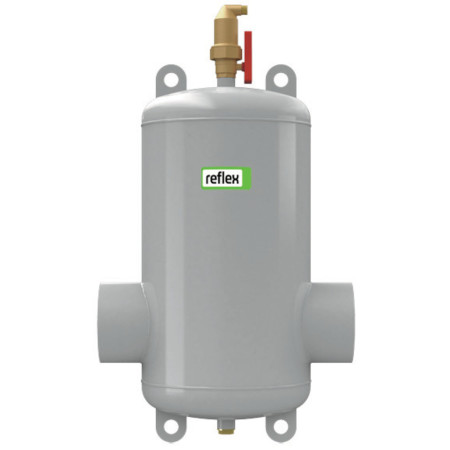
Reflex Exvoid A 88.9 microbubble separator, welding spigots
Where to install the air separator so that it works effectively?
Optimal location determines the effectiveness of gas removal throughout the heating season. Install the device in the hottest zone of the circuit - directly behind the heat source, where the temperature of the medium reaches maximum values that cause intensive release of dissolved gases. Installation in the return upstream of the boiler or exchanger ensures the highest separation efficiency with minimal investment costs.
Vertical installation ensures proper operation of the separation mechanism using the density difference between gas and liquid. Horizontal or diagonal mounting interferes with the natural ascending movement of air bubbles toward the automatic vent mounted at the top of the chamber, drastically reducing the efficiency of the unit.
The most important rules that define the mounting position include:
- Location downstream of the heat source in the hottest zone of the system - the temperature of the medium above 60°C ensures optimal efficiency in the separation of dissolved gases from the volume of the heating medium.
- Mounting in front of the circulating pump to protect the impeller and bearings from the effects of cavitation - the minimum distance should be at least five diameters of the pump discharge pipe.
- Provide free access to the automatic vent mounted on the top of the separator to allow inspection and maintenance of the mechanism releasing the accumulated gases.
- Avoiding areas with an increased risk of refrigerant freezing during plant shutdown - the separator must be protected from temperature drops below zero degrees Celsius.
How is the installation of the air separator step by step?
Properly installed separator is one of the key elements of effective venting of the heating system. The good news is that the whole process doesn't have to be complicated or time-consuming - as long as it's done according to a few proven principles. They are the ones that determine whether air separators actually eliminate noise, airing and pump problems.
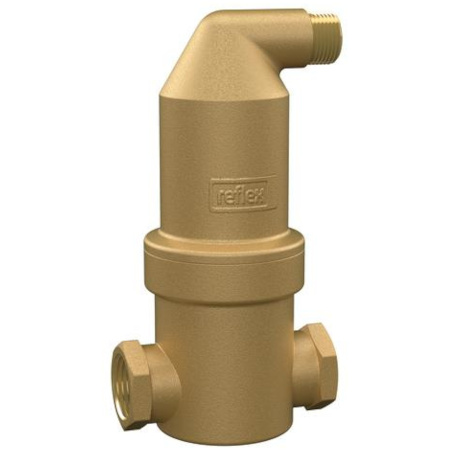
Reflex Exvoid A 22 mm microbubble separator
1. Preparation of the installation for the air separator
Installation begins with turning off the heat source and draining the section of the system where the separator will appear. This is the moment when it is worthwhile to take care of clean pipe ends - the removal of sediment and residual seals prevents later leaks and problems with the operation of the device.
2. The right place matters
The separator should go to the "best point" of the installation - where the medium is warmest and most easily gives off dissolved gases. Mounting before the circulation pump protects it from cavitation and significantly improves the venting efficiency of the entire system.
3. Correct connection and orientation of the separator
The separator is mounted vertically, according to the direction of flow marked on the housing. This is crucial - even the best air separators will not work properly if they are mounted horizontally or "inverted.". Once attached, simply remove the transport lock on the vent to make the device ready for use.
4. Initial start-up and functional check
After refilling the system and starting the pump, the separator starts working automatically. In the first few minutes, it can intensely remove air - this is a natural stage of stabilizing the system. From this point on, venting of the heating system takes place automatically, without manual valves and constant calls for service.
What to avoid?
The most common mistakes are installation in the cold part of the system, lack of vertical position of the device and lack of access to the vent. Such "savings" quickly end up with radiator noise and a drop in system efficiency.
A well-installed air separator means quiet installation, stable pump operation and real savings. One technical decision that pays off over many heating seasons.
Take care of professional installation of an air separator, and your heating system will work quietly and efficiently for many seasons, eliminating costly failures of pumps and exchangers!
Recommended
Separator mikropęcherzy powietrza Reflex Exvoid A 168.3, z króćcami do spawania
Separator mikropęcherzy powietrza Reflex Exvoid A 114.3, z króćcami do spawania